Board Fence Calculator
Boards, rows, posts and fasteners for a horizontal board fence.
Horizontal board fences are priced by board rows, not pickets. This tool works out how many rows your height needs, converts that into linear board feet, and turns it into a real board count at the length you plan to buy.
1x6 = 5.5", 1x4 = 3.5"
0" solid, 0.25" typical
6 ft max for horizontal boards
10% recommended
Calculation Results
Planning estimate — actual quotes vary
Get quotes from local fence companies
Tell local pros about your project and compare their quotes with your planning estimate.
Quote requests are handled by Networx Systems, Inc. and its Partners, who may contact you about your project. We may be compensated for referrals.

Save this calculation in the free app
Smart Fencing Calculator keeps your fence projects on your phone and works offline on the job site. On iPhone? It's inside Roofing Calculator & Estimator.
📌 Horizontal boards sag between posts — keep line posts at 6 ft or under, or add a mid-span vertical stiffener.
Choosing posts for a horizontal fence? See our fence post buying guide.
Vertical pickets instead of boards? Use the wood fence calculator.
Fencing a paddock for a horse lover? See our gifts for horse lovers.
📱 More free Android calculators
Fence, deck, roofing, gravel, sod, drywall, tile and insulation estimators from Dixon App Studio — all free on Google Play, all work offline.
Smart Fencing CalculatorThis site
Fence posts, pickets, rails, concrete, gates and total project cost.
Get it on Google PlaySmart Decking Calculator
Deck boards, joists, footings, railings and material cost estimates.
Get it on Google PlaySmart Drywall Calculator
Drywall sheets, mud, tape, screws and finishing cost estimates.
Get it on Google PlaySod Calculator: Mulch, Topsoil
Sod pallets, mulch, topsoil and seed for the yard around your new fence.
Get it on Google PlayPea Gravel & Stone Calculator
Gravel, crushed stone and base rock in tons and cubic yards.
Get it on Google PlayRoofing Calculator
Roof squares, shingles, underlayment and roof replacement cost.
Get it on Google PlayTile Calculator: Grout, Shower
Tile boxes, grout, thinset and backer board for floors and showers.
Get it on Google PlayInsulation Calculator: R-Value
Blown-in bags, batts, rolls and spray foam to a target R-value.
Get it on Google Play🔧 Recommended Fencing Tools & Supplies
Disclosure: As an Amazon Associate I earn from qualifying purchases.

VEVOR Post Hole Digger,52cc 1450W Auger Digger,Gas Powered Earth Digger with Two Drill Bit 6''& 10''and 3 Extension Rods,for Farmland,Garden and Plant,EPA Certification,Black+Orange+White
$159.90
Check price on Amazon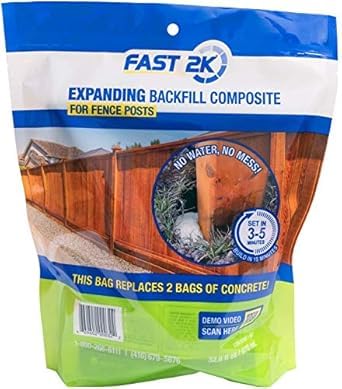
H.B. Fuller Fast 2K Post Anchor Mix | Expanding Composite Footing Compound (Fence, 1)
$27.99
Check price on Amazon
Gtongoko 8LB T Post Driver with Handles, Fence Post Pounder, Black | 2.7" Inner Diameter Fit, Dual Handle Control Grip, Steel Construction with Powder Coating, Fence Installation Support
$30.99
Check price on Amazon
Ready Seal Exterior Wood Stain | Semi-Transparent Oil-Based Formula | Professional Grade Stain and Sealer in One | Ideal for Decks, Fences, Pergolas, Wood Siding & More | Gallon | Dark Walnut
$39.99
Check price on AmazonPrices as of Oct 22, 2026, 4:35 AM UTC. Product prices and availability are accurate as of the date/time indicated and are subject to change. Any price and availability information displayed on Amazon.com at the time of purchase will apply to the purchase of this product.
🛠️ How This Calculator Works
Divides fence height by the board width plus gap to get the number of rows. Horizontal boards have no rails behind them, so every butt joint has to land on a post: each board covers as many whole post bays as its length allows, and the rest is offcut. Rows × boards per row, plus your waste percentage, is what to buy.
📐 Formula
Boards = rows × ⌈bays ÷ ⌊board length ÷ post spacing⌋⌉ × (1 + waste %)📝 Example Calculation
150 ft · 6 ft tall · 5.5" boards · 1/4" gap · posts 6 ft apart · 16 ft boards Rows = 72 ÷ 5.75 → 13 · Bays = 150 ÷ 6 = 25 A 16 ft board spans 2 bays (12 ft) with 4 ft offcut → 13 boards per row Boards = 13 × 13 × 1.10 ≈ 186 (12 ft boards would need the same count with no offcut)
💡 Pro Tips from Fence Builders
- Horizontal boards need posts closer together than a picket fence — 6 ft on center is the safe maximum, and 5 ft looks straighter over time.
- Buy the longest boards you can handle. Every joint has to land on a post, so 16 ft stock on 8 ft posts wastes far less than 8 ft stock.
- Rip the top board rather than the bottom one if the math leaves a partial row — the cut edge is far less visible up high.
- Kiln-dried boards shrink. A 1/4 inch gap installed in summer often opens to 3/8 inch by winter, so go tight if you want privacy.
- Use two screws per board at every post, and stainless or coated deck screws if you are anywhere near salt air.
How a horizontal board fence is laid out
A horizontal (or slat) fence turns the usual construction on its side. Instead of vertical pickets nailed to two or three rails, boards run post to post and stack up the height of the fence, usually with a small even gap between them. That changes the math: the count comes from rows, not pickets per foot, and because the boards span between posts, post spacing and board length matter far more than on a vertical fence.
Rows for a 6 ft fence
| Board | Butted | ¼ in gap | ½ in gap | ¾ in gap |
|---|---|---|---|---|
| 1x4 (3.5 in) | 21 rows | 20 rows | 18 rows | 17 rows |
| 1x6 (5.5 in) | 14 rows | 13 rows | 12 rows | 12 rows |
| 1x8 (7.25 in) | 10 rows | 10 rows | 10 rows | 9 rows |
Rows are rounded up, so the top row is often a ripped board. Rip the top one rather than the bottom one — the cut edge is far less visible up high.
Horizontal wood fence material list by length
The calculator's own results for 1x6 boards (5.5 in) with a ¼ in gap, posts 6 ft on centre and 12 ft boards — the length that spans two bays with no offcut — including 10% waste. Board cost assumes $9 per 12 ft board.
| Fence | Rows | Boards (12 ft) | Posts | Screws | Board cost |
|---|---|---|---|---|---|
| 50 ft × 4 ft | 9 | 50 | 10 | 199 | $450 |
| 50 ft × 6 ft | 13 | 72 | 10 | 286 | $648 |
| 100 ft × 4 ft | 9 | 90 | 18 | 357 | $810 |
| 100 ft × 6 ft | 13 | 129 | 18 | 515 | $1,161 |
| 150 ft × 6 ft | 13 | 186 | 26 | 744 | $1,674 |
| 200 ft × 6 ft | 13 | 244 | 35 | 1,002 | $2,196 |
Add post concrete (the concrete calculator sizes the holes) and, if you want a cap rail or trim boards, one extra board run per row of trim. For a conventional vertical picket fence, the wood fence calculator counts pickets and rails instead, and the composite fence calculator prices a no-stain alternative.
Post spacing and sag
A ¾ in thick 1× board spanning 8 ft between posts will sag and twist within a season or two, especially in cedar. Keep posts 6 ft on centre for 1× boards, or add a vertical nailer (a 2×4 fixed between the top cap and a bottom rail) at mid-span. Thicker 5/4 or 2× boards can span 8 ft. Composite slat systems usually slide into aluminum channels on the posts and set their own spacing.
Getting the board order right
- Choose a board length that divides evenly by the post spacing — 12 ft boards on 6 ft posts, 16 ft on 8 ft — so there is no offcut.
- Stagger joints from row to row across different posts so there is no single seam line.
- Order about 10% extra to cull crooked or split boards; you will want the straightest ones at eye level.
- Use exterior-rated screws (stainless for cedar, to avoid black streaks), two per board at every post.
Related calculators
Set the posts with the fence post calculator and the concrete calculator, check your spacing with the post spacing calculator, and compare the cost with a conventional privacy fence or a board-on-board fence. When it is built, the fence staining cost calculator prices the finish and the install cost calculator adds labor.
❓ Frequently Asked Questions
How many boards do I need for a horizontal fence?
Multiply the number of rows by your fence length to get linear board feet, then divide by the board length you plan to buy. Every joint must land on a post, so count boards per row by whole post bays. A 6 ft tall, 150 ft fence using 5.5 inch boards with posts 6 ft apart needs 13 rows and about 186 boards with 10% waste — 12 ft boards (two bays each, no offcut) are the efficient buy.
How far apart should posts be on a board fence?
6 ft on center is the practical maximum. Horizontal boards have no rails supporting them mid-span, so anything wider will visibly bow within a couple of seasons.
What size boards are used for horizontal fences?
1x6 (5.5 inches actual) is the most common, with 1x4 and 1x8 used for narrower or wider looks. Thicker 5/4 stock resists cupping much better on spans over 6 ft.
Is a horizontal board fence more expensive than a picket fence?
Usually 15–30% more, because it needs more posts, longer boards and straighter lumber. Run the numbers against the wood fence calculator to compare your exact layout.
How much does a horizontal fence cost?
Horizontal board fences usually cost more than a vertical privacy fence of the same length — more posts, wider and straighter boards, and joints that must land on posts. Price the boards here, then use the install cost calculator for posts, concrete and labor.
How do I calculate wood fence materials for a horizontal fence?
Work out rows first: fence height in inches divided by board width plus gap, rounded up — 13 rows of 1x6 with a 1/4 inch gap on a 6 ft fence. Then posts: fence length divided by post spacing, plus one. Then boards: rows times boards per row, where each board covers whole post bays, plus 10% waste. A 100 ft, 6 ft tall fence on 6 ft posts with 12 ft boards takes 18 posts, 129 boards and about 515 screws.
How many boards for a 4 ft horizontal fence?
With 1x6 boards and a 1/4 inch gap a 4 ft fence is 9 rows. On posts 6 ft apart using 12 ft boards that is 50 boards for 50 ft, 90 for 100 ft and 129 for 150 ft, each including a 10% allowance for culls.
Do horizontal boards go on the inside or outside of the posts?
Outside, facing the street or neighbor, is standard and looks best. Inside mounting is stronger but leaves the post faces showing.
📬 Free Fencing Cost Guide
Get weekly fencing tips, material cost updates, and exclusive calculator guides — straight to your inbox.
No spam, ever. Unsubscribe anytime.
📝 Related Articles
🧮 You May Also Need
Related calculators for your fencing project