
Horizontal Fence Calculator
Boards, posts, screws and cost for a horizontal slat fence.
Horizontal fences use more boards than vertical ones and every board has to land on a post. This works out the rows, the cuts per board, the posts and the price for your run, board size and gap.
Calculation Results
13 rows of boards cover 77.5" — trim the top row or let it stand proud under the cap.
📱 More free Android calculators
Fencing, decking and drywall estimators from Dixon App Studio — all free on Google Play.
Smart Fencing CalculatorThis site
Fence posts, pickets, rails, concrete, gates and total project cost.
Get it on Google PlaySmart Decking Calculator
Deck boards, joists, footings, railings and material cost estimates.
Get it on Google PlaySmart Drywall Calculator
Drywall sheets, mud, tape, screws and finishing cost estimates.
Get it on Google PlaySod Calculator: Mulch, Topsoil
Sod pallets, mulch, topsoil and seed for the yard around your new fence.
Get it on Google PlayGravel & Stone Calculator
Gravel, crushed stone and base rock in tons and cubic yards.
Get it on Google Play🔧 Recommended Fencing Tools & Supplies
Disclosure: As an Amazon Associate I earn from qualifying purchases.

VEVOR Post Hole Digger,52cc 1450W Auger Digger,Gas Powered Earth Digger with Two Drill Bit 6''& 10''and 3 Extension Rods,for Farmland,Garden and Plant,EPA Certification,Black+Orange+White
$159.90
Check price on Amazon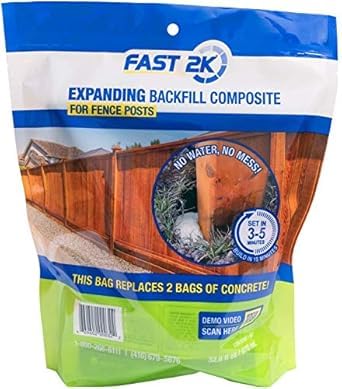
H.B. Fuller Fast 2K Post Anchor Mix | Expanding Composite Footing Compound (Fence, 1)
$27.99
Check price on Amazon

Ready Seal Exterior Wood Stain | Semi-Transparent Oil-Based Formula | Professional Grade Stain and Sealer in One | Ideal for Decks, Fences, Pergolas, Wood Siding & More | Gallon | Dark Walnut
$39.99
Check price on AmazonPrices as of Sep 29, 2026, 4:37 AM UTC. Product prices and availability are accurate as of the date/time indicated and are subject to change. Any price and availability information displayed on Amazon.com at the time of purchase will apply to the purchase of this product.
🛠️ How This Calculator Works
The run is split into sections at your post spacing. Each section needs one board per row, and the number of rows is the height divided by one board plus one gap, rounded up. Every piece is cut to the post spacing, so a 12 ft board gives two 6 ft pieces and a 16 ft board gives two 8 ft pieces — the offcut is the waste you pay for. Posts are sections plus one, screws are two at each board end on each post, and the top cap is one board per stock length along the run.
📐 Formula
Rows = ⌈(height + gap) ÷ (board width + gap)⌉ · Pieces = rows × sections · Boards = ⌈pieces ÷ ⌊board length ÷ spacing⌋⌉ × (1 + waste) · Posts = sections + 1📝 Example Calculation
100 ft of 6 ft fence, 1x6 boards (5.5") with a ½" gap, posts every 6 ft, 12 ft boards: Sections = ⌈100 ÷ 6⌉ = 17, posts = 18 Rows = ⌈(72 + 0.5) ÷ 6⌉ = 13 Pieces = 13 × 17 = 221, two per 12 ft board → 111 boards, +10% = 123, + 9 cap boards = 132
💡 Pro Tips from Fence Builders
- Keep posts at 6 ft on centre for 1x boards. Horizontal boards carry their own weight across the span, and a 1x6 over 8 ft visibly sags within a season. If you want 8 ft bays, add a vertical 2x4 nailer at mid-span.
- Buy stock that divides evenly into your spacing: 12 ft boards for 6 ft bays, 16 ft for 8 ft bays. A 10 ft board into 6 ft bays throws away 4 ft of every board.
- Use a spacer block, not a tape, for the gap. A strip of ½" plywood or a pair of 16d nails keeps every row identical, and the eye picks up a 1/8" wander instantly on a horizontal fence.
- Stagger the joints only if your boards span two bays. Butting every board at the same post makes a clean vertical line; alternating them hides a crooked post but needs longer stock.
- Face-screw with two exterior screws per board end, set 3/4" in from the edge. Nails pop on horizontal boards because seasonal movement works along the length.
- Cedar and redwood are the usual boards because they stay straight. Pressure-treated pine is cheaper but cups more — buy it dry, or let it acclimatise stacked and stickered for two weeks before you hang it.
❓ Frequently Asked Questions
How many boards do I need for a horizontal fence?
Work out the rows first: divide the fence height in inches by one board width plus one gap and round up. A 6 ft fence in 1x6 boards (5.5 in actual) with half-inch gaps needs 13 rows. Multiply by the number of sections to get pieces, then divide by how many pieces each stock board yields at your post spacing. The calculator does all three steps and adds waste.
What is the best post spacing for a horizontal fence?
Six feet on centre for 1x boards. Horizontal boards are only supported at their ends, so the span decides whether they sag. Eight-foot bays work with 5/4 or 2x boards, or with a vertical 2x4 stud added at mid-span of every section.
What wood is best for a horizontal fence?
Western red cedar is the common choice because it is stable, light and takes a finish well. Redwood behaves similarly. Pressure-treated pine is cheapest but moves more as it dries, which shows on a horizontal fence. Composite and aluminium slat systems avoid movement entirely at a higher price.
How big should the gap be between horizontal fence boards?
For privacy, 1/4 to 1/2 inch; it still lets wind through and hides the yard from most angles. A 1 inch gap reads as a modern slat screen and uses fewer boards. Zero gap is possible, but boards swell when wet, so leave at least 1/8 inch with green timber.
Are horizontal fences more expensive than vertical ones?
Usually 10 to 30% more in materials. Every board has to be long enough to reach post to post, so there is more cutting waste, posts are closer together, and the boards are typically better-grade cedar. Labour is also higher because every row has to be level.
Do I need a top cap on a horizontal fence?
It is optional but worth it. A cap board sheds water off the top edge of the highest row and the post tops, hides uneven post heights and stiffens the whole fence. The calculator adds one board per stock length along the run when the cap is switched on.
How do I keep a horizontal fence from sagging?
Close the post spacing, use thicker boards, or add a mid-span stud. Screw the boards rather than nailing them, and make sure the posts are plumb and set in concrete — a leaning post drops every board attached to it.
Can I build a horizontal fence on a slope?
Yes, but it has to be stepped: horizontal boards cannot follow the ground. Each section is built level and drops at the post. The fence on a slope calculator works out the step height per section and how much longer the downhill posts need to be.
📬 Free Fencing Cost Guide
Get weekly fencing tips, material cost updates, and exclusive calculator guides — straight to your inbox.
No spam, ever. Unsubscribe anytime.
📝 Related Articles
🧮 You May Also Need
Related calculators for your fencing project




Why a horizontal fence needs its own calculator
A vertical picket fence is counted in pickets per foot. A horizontal fence is counted in rows per section, and that changes everything downstream. Each board runs from one post to the next, so the post spacing sets the length of every piece you cut, and the stock length you buy decides how much of each board ends up on the offcut pile. Get the spacing and the stock length to agree and the waste is close to zero; get them wrong and a third of the timber you paid for goes in the skip.
The height works differently too. Boards are sold by nominal size, but a 1x6 is 5.5 inches wide, and every gap you leave adds up over twelve or more rows. On a 6 ft fence, a half-inch gap versus no gap is the difference between 13 and 14 rows — one extra board in every single bay.
Posts: closer than you are used to
Standard vertical fences put posts 8 ft apart because the rails carry the pickets. A horizontal fence has no rails: the boards are the structure. A 1x board supported only at its ends will sag over 8 ft, so 6 ft on centre is the norm. If the design calls for wider bays, add a vertical 2x4 at mid-span of each section for the boards to screw into; switch on the centre stud option and the calculator counts them and the extra screws.
Set the posts in concrete to the usual depth — a third of the post above ground is a good rule, with at least 24 inches in the ground. The post depth calculator and the concrete calculator size the holes and bags exactly; this page assumes two 50 lb bags per post.
Choosing boards
Cedar is the default for a reason: it stays flat. Horizontal boards show every cup and twist because your eye follows the long lines of the gaps. If you use pressure-treated pine to save money, buy kiln-dried-after-treatment stock or let the boards dry stacked with spacers for a couple of weeks. Wider boards mean fewer rows and less labour, but they move more with the weather; 1x6 is the usual compromise.
Face-screwing is standard. Use exterior-rated screws — the same coated or stainless deck screws you would use outdoors on a deck. The Smart Decking Calculator has a screw and hidden-fastener calculator if you want a finer count for the fastener budget.
Level is everything
Start the bottom row 2 inches off the ground so it does not wick water, set it dead level with a long level or a string line, then stack every row on spacer blocks. Check level every third row; small errors compound. On sloping ground a horizontal fence has to step down section by section — see the fence on a slope calculator for the step height and the longer downhill posts. A 2 to 4 inch gravel base under each post hole keeps the post end draining; the Smart Gravel Calculator works out how much to order.
Finishing and cost
Seal or stain within a few weeks of building, before the boards grey and check. Horizontal boards hold water on their top edges, so a penetrating oil stain lasts better than a film finish. Size the stain with the stain calculator — remember a horizontal fence has two faces and the board edges.
The default prices above are typical big-box figures for 12 ft cedar 1x6 and 4x4 posts in 2026; replace them with your local quotes. For a side-by-side with other styles, compare the total against the privacy fence calculator or the board on board calculator, and see installed cost if you are hiring it out.