
Fence on a Slope Calculator
Stepped or racked: step height, post lengths and extra material on sloping ground.
Enter the level run and how far the ground drops. This gives the slope, the step at every post if you build stepped panels, how long the downhill posts must be, the gap to fill under each step, and whether a racked panel can follow the ground instead.
Calculation Results
A 4.8" drop per section is within a 12" rack — racked panels keep the bottom tight to the ground.
📱 More free Android calculators
Fencing, decking and drywall estimators from Dixon App Studio — all free on Google Play.
Smart Fencing CalculatorThis site
Fence posts, pickets, rails, concrete, gates and total project cost.
Get it on Google PlaySmart Decking Calculator
Deck boards, joists, footings, railings and material cost estimates.
Get it on Google PlaySmart Drywall Calculator
Drywall sheets, mud, tape, screws and finishing cost estimates.
Get it on Google PlaySod Calculator: Mulch, Topsoil
Sod pallets, mulch, topsoil and seed for the yard around your new fence.
Get it on Google PlayGravel & Stone Calculator
Gravel, crushed stone and base rock in tons and cubic yards.
Get it on Google Play🔧 Recommended Fencing Tools & Supplies
Disclosure: As an Amazon Associate I earn from qualifying purchases.

VEVOR Post Hole Digger,52cc 1450W Auger Digger,Gas Powered Earth Digger with Two Drill Bit 6''& 10''and 3 Extension Rods,for Farmland,Garden and Plant,EPA Certification,Black+Orange+White
$159.90
Check price on Amazon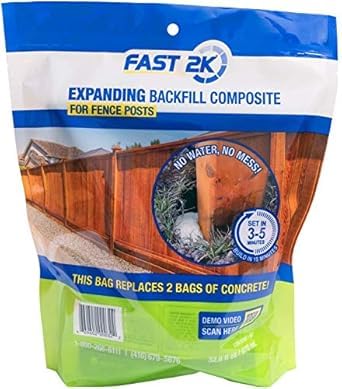
H.B. Fuller Fast 2K Post Anchor Mix | Expanding Composite Footing Compound (Fence, 1)
$27.99
Check price on Amazon

Ready Seal Exterior Wood Stain | Semi-Transparent Oil-Based Formula | Professional Grade Stain and Sealer in One | Ideal for Decks, Fences, Pergolas, Wood Siding & More | Gallon | Dark Walnut
$39.99
Check price on AmazonPrices as of Sep 29, 2026, 4:37 AM UTC. Product prices and availability are accurate as of the date/time indicated and are subject to change. Any price and availability information displayed on Amazon.com at the time of purchase will apply to the purchase of this product.
🛠️ How This Calculator Works
Slope is the rise divided by the level run. The run is split into sections at your post spacing. A stepped fence keeps every section level, so each post is a step lower than the last and the step is the total rise divided by the number of sections. The downhill post of each step shows the fence height plus that step, so it has to be longer. A racked fence tilts each panel to follow the ground; that only works while the drop across one section is within what the panel can rack.
📐 Formula
Slope % = rise ÷ run × 100 · Step = rise × 12 ÷ sections · Stepped post = height + step + bury · Gap per section = ½ × span × step · Along-ground length = √(run² + rise²)📝 Example Calculation
80 ft run dropping 4 ft, posts every 8 ft, 6 ft fence, 2 ft in the ground: Slope = 4 ÷ 80 = 5% (2.9°) Sections = 10, step = 48" ÷ 10 = 4.8" Stepped posts = 6 + 0.4 + 2 = 8.4 ft → buy 10 ft posts Gap under steps = 10 × ½ × 8 × 0.4 = 16 sq ft 4.8" per section is inside a 12" rack, so racked panels work.
💡 Pro Tips from Fence Builders
- Measure the rise with a string line and line level, not by eye. Stake the top of the run, pull a level string to a stake at the bottom and measure from the string down to the ground.
- Stepped fences look best when every step is the same. Space the posts evenly over the run rather than using standard 8 ft bays with a short one at the end, and the steps come out equal.
- Buy posts one size up for stepped fences. A 6 ft fence on 8 ft posts has no margin once the downhill post carries a 5 inch step; 10 ft posts leave room to trim the tops level.
- Ask the panel supplier for the rack limit. Many vinyl and aluminium panels rack 12 to 24 inches over a 6 to 8 ft section; welded steel panels often do not rack at all.
- Fill the triangles under stepped panels with a pressure-treated gravel board, a row of landscape blocks or a trench of gravel — dogs find them first.
- Wood board fences can be built racked for free: set the rails parallel to the ground and hang the pickets plumb. Only the post tops need trimming.
❓ Frequently Asked Questions
Should a fence on a slope be stepped or racked?
Rack it if the ground is fairly even and the drop across one section is within what your panels can rack — the fence then follows the ground with no gaps. Step it when the slope is steep, when the ground undulates, or with rigid panels that cannot rack. Horizontal board fences must be stepped.
How do you calculate the step height for a stepped fence?
Measure the total elevation change over the run, convert it to inches and divide by the number of sections. An 80 ft run that drops 4 ft with posts every 8 ft has 10 sections, so each step is 4.8 inches.
How long do posts need to be on a slope?
For a stepped fence, the downhill post of each section shows the fence height plus the step, and still needs its full depth in the ground. A 6 ft fence with a 4.8 inch step and 2 ft burial needs 8.4 ft posts, so buy 10 ft. Racked fences use the normal post length.
How steep a slope can you fence?
Any slope can be fenced, but above about 15 to 20% steps get large and racked panels run out of adjustment. Very steep ground is usually handled with shorter sections, which make smaller steps, or with a racked wire or post-and-rail fence.
What goes in the gap under a stepped fence?
A pressure-treated kickboard cut to the triangle, landscape blocks, or a gravel-filled trench. The calculator gives the total triangle area so you can price a kickboard or estimate gravel.
Does a sloped fence need more material?
A racked fence follows the ground, so its rails and wire run the along-ground length, which is slightly longer than the level run — only about 1% more on a 5% slope. A stepped fence uses the level run for panels but needs longer posts and something to close the gaps.
How do I measure the slope of my yard?
Drive a stake at the top and bottom, tie a string at ground level on the top stake, stretch it level to the bottom stake with a line level and measure from the string to the ground. That is the rise; the string length is the run.
Can vinyl fence be installed on a slope?
Yes. Most vinyl privacy panels are stepped; many picket and rail styles can be racked a little by adjusting the rail holes. Check the manufacturer's rack limit and put it in the calculator to see whether your slope is within it.
📬 Free Fencing Cost Guide
Get weekly fencing tips, material cost updates, and exclusive calculator guides — straight to your inbox.
No spam, ever. Unsubscribe anytime.
📝 Related Articles
🧮 You May Also Need
Related calculators for your fencing project







Stepped vs racked, in one picture
Picture a staircase and a ramp. A stepped fence is the staircase: every section is level, and the fence drops at each post. The top line looks tidy and every panel is square, but a triangle opens under each section on the downhill side. A racked fence is the ramp: each panel leans to follow the ground, so the bottom stays tight to the soil and the top runs parallel to the slope. Neither is more correct; the ground and the panels decide.
When racking works
Racking needs panels whose pickets can pivot on the rails, and a slope even enough that the drop across one section is within that pivot. Aluminium and many vinyl picket panels rack a set amount — ask the supplier and enter it above. Site-built wood fences rack as far as you like, because you set the rails along the slope and hang the pickets plumb. Wire fences, post-and-rail and split rail follow almost any slope; see the split rail calculator and woven wire calculator.
When to step
Step the fence when the panels are rigid (most privacy panels and welded steel), when the fence is horizontal boards (see the horizontal fence calculator), or when the slope is steep enough that racked panels would lean visibly. Keep every step the same: space the posts evenly over the whole run rather than using standard bays with a short one at the end. Shorter sections make smaller steps, which is the easiest fix for a steep yard.
Posts on a slope
The downhill post of each step carries the fence height plus the step, and it still needs its full depth in the ground. That is why stepped fences almost always need posts a size longer than the same fence on the flat. Size the holes and concrete with the post depth calculator and concrete calculator, and count posts for the run with the fence post calculator.
Closing the gaps
Under a stepped fence the triangles add up quickly. On the example above it is 16 sq ft of opening — plenty for a dog. A pressure-treated gravel board cut to each triangle is the neatest fix; a row of landscape block or a trench of drainage gravel also works and keeps the fence bottom dry. The Smart Gravel Calculator works out the tonnage for a trench, and the block wall calculator covers a short retaining course if the grade needs holding back.
Check the rules first
Height limits are usually measured from the ground on the uphill or the downhill side depending on the town, and a stepped fence can exceed a limit at the tall end of every step. Read the fence permit guide and the property line rules before you set posts on a boundary slope.