Fence Permit Requirements
Almost every fence dispute that ends badly started with someone skipping a twenty-minute phone call to the permit desk. Fence permitting in the United States is local — set by city or county zoning code, not by any national standard — but the triggers are remarkably consistent, and knowing them tells you in about five minutes whether your project needs paperwork.
This page covers what usually triggers a permit, what one costs, how long it takes, what the site plan has to show, and the traps (easements, corner lots, pool barriers, HOAs) that catch homeowners. Once you know your allowed height, size the job with the linear footage calculator and budget it with the cost to install a fence calculator.
What usually triggers a fence permit
| Situation | Typical requirement | Why |
|---|---|---|
| Fence height over 6 ft (rear/side yard) | Permit required almost everywhere | 6 ft is the near-universal by-right limit behind the front setback. |
| Fence height over 3–4 ft in the front yard | Permit or variance required | Front-yard limits protect driveway and intersection sight lines. |
| Any fence enclosing a pool or spa | Permit always required | Barrier codes govern height, gaps, self-closing latches and gate swing. |
| Masonry, concrete or block fence walls | Permit required | Footings and reinforcement are structural, so plan review applies. |
| Fence on a corner lot near an intersection | Permit or sight-triangle review | Most cities cap corner fences at 3 ft inside the vision triangle. |
| Fence in an easement, floodplain or wetland buffer | Permit plus agency sign-off | Utility and drainage easements can require removal at your expense. |
| Electrified or barbed wire in a residential zone | Usually prohibited or permit-only | Often allowed only on agricultural or industrial parcels. |
| Replacing an existing fence on the same line, same height | Often exempt | Many cities exempt like-for-like repair under 50% of the run. |
General patterns across U.S. municipalities, not legal advice. Your city or county code controls — confirm with your local building or planning department before you order materials.
Typical height limits by yard
| Location on the lot | Common by-right height | Notes |
|---|---|---|
| Rear yard | 6 ft | 7–8 ft allowed in some cities with a permit |
| Side yard behind the front setback | 6 ft | Steps down where it meets the front yard |
| Front yard | 3–4 ft | Often open-style only (picket, split rail, aluminum) |
| Corner lot sight triangle | 3 ft | Measured back from the intersection, typically 25 ft each way |
| Pool barrier | 4 ft minimum | Safety code minimum, not a maximum |
| Alley or rear lane frontage | 6 ft | May require setback from the pavement edge |
How to get a fence permit, step by step
- Confirm your zoning district. Height limits are written per zoning district, not per city. Look your parcel up on the county GIS or assessor site and note the district code before you read the rules.
- Read the fence ordinance, not the FAQ. Search your municipal code for the word 'fence'. The ordinance gives exact height limits by yard, allowed materials, and the finished-side rule.
- Locate the true property line. Pull your plat map or order a boundary survey ($400–$1,200). A fence built on the wrong side of the line is the single most expensive fencing mistake.
- Draw a site plan. Nearly every application wants a scaled plot plan showing the house, lot lines, the proposed fence run, height, material and gate locations. Hand-drawn on a copy of your plat is usually accepted.
- Check the HOA separately. HOA approval is a private contract, not a permit. A city permit does not protect you from an HOA fine, and HOA approval does not satisfy the city.
- Apply and wait for the inspection. Most residential fence permits are issued over the counter or in 1–10 business days. Some jurisdictions require a post-hole or final inspection before you backfill.
Call 811 before you dig — every time
A permit is a zoning question; utility locates are a safety question, and they are separate. In the United States, dialing 811 (or filing online) two to three business days before digging is free and in most states legally required. Fence post holes are shallow but they are exactly deep enough to find gas services, irrigation, cable and shallow electrical runs. Once the flags are down, plan your post layout with the post spacing calculator and confirm hole depth with the post depth calculator.
Permit fees in context
A $50 to $150 permit is a rounding error next to the fence itself — a 150 ft wood privacy fence runs roughly $3,300 to $6,750 installed. The real cost of skipping it is the retroactive scenario: double fees, a fine, and potentially tearing out finished work. Add the permit line to your budget from the start using the materials cost calculator.
HOA rules are a separate hurdle
Homeowner associations commonly restrict fence material, color, style and height more tightly than the city does — a code that allows 6 ft wood may sit inside an HOA that requires black aluminum at 4 ft. Submit to the architectural review committee before you buy anything, get the approval in writing, and keep it: HOA boards change, and the letter is your defense years later.
Frequently asked questions
Do I need a permit to build a fence?
In most U.S. cities you need a permit for any fence over 6 ft tall, any fence over 3–4 ft in a front yard, any pool barrier, and any masonry fence wall. Short decorative fences and like-for-like replacements are commonly exempt. The rule is set by your city or county zoning code, so always confirm locally before you dig.
How much does a fence permit cost?
Typical residential fence permits run $30 to $150. Some cities charge a flat $50, others scale with the value of the work, and pool barrier permits are often higher because they include an inspection. Plan review or variance requests add $100 to $500.
How long does it take to get a fence permit?
Over-the-counter issuance the same day in small towns; 3 to 10 business days in most mid-size cities; 2 to 6 weeks where plan review, historic district review or a variance is involved.
How tall can a fence be without a permit?
Six feet in the rear and side yards is the most common by-right limit, dropping to 3 or 4 feet in the front yard and inside corner sight triangles. Some jurisdictions allow 7 or 8 feet in rear yards; others cap at 5. Check your zoning district.
What happens if I build a fence without a permit?
Typical outcomes are a stop-work notice, a retroactive permit at double or triple the normal fee, a fine, and in the worst case an order to lower or remove the fence. Unpermitted fences also surface during a title or appraisal review when you sell.
Do I need a permit to replace an existing fence?
Often no, if you rebuild on the same line at the same height with the same material and replace less than a set share of the run (commonly 50%). Increasing the height or moving the line almost always triggers a permit.
What is required on a fence permit site plan?
A scaled drawing showing property lines with dimensions, the house footprint, the proposed fence route, its height and material, gate locations and widths, and the distance from the fence to each lot line, sidewalk and easement.
Do I need a permit for a pool fence?
Yes, essentially everywhere. Pool barrier rules are safety code, not just zoning: typically a minimum 48 in height, no gaps over 4 in, no climbable horizontal members on the outside, and a self-closing, self-latching gate that swings away from the pool. See the pool fence calculator for spacing and gate layout.
Does a permit tell me where the property line is?
No. The permit office reviews your drawing but does not survey your lot. Establishing the boundary is entirely on you, which is why a survey or a careful plat reading is the cheapest insurance in the whole project.
Do I need a permit for a chain link fence?
The material rarely matters; the height and location do. A 4 ft residential chain link fence in a back yard is exempt in most cities, while the same fence at 8 ft or in a front setback needs a permit.
Who pulls the permit, me or the contractor?
A licensed fencing contractor normally pulls it and the fee is folded into the bid. If you are asked to pull the permit yourself for a contractor's job, treat that as a warning sign about their licensing.
Do I need a permit for a farm or agricultural fence?
Most counties exempt agricultural fencing on land zoned agricultural, including woven wire, barbed wire and electric fence. Those exemptions usually disappear the moment the parcel is inside city limits or zoned residential.
This guide describes common practice across U.S. jurisdictions and is not legal advice. Fence rules are set locally and change; verify with your building or planning department, and for boundary disputes consult a licensed surveyor or attorney.
📝 Related Articles
🔧 Recommended Fencing Tools & Supplies
Disclosure: As an Amazon Associate I earn from qualifying purchases.

VEVOR Post Hole Digger,52cc 1450W Auger Digger,Gas Powered Earth Digger with Two Drill Bit 6''& 10''and 3 Extension Rods,for Farmland,Garden and Plant,EPA Certification,Black+Orange+White
$159.90
Check price on Amazon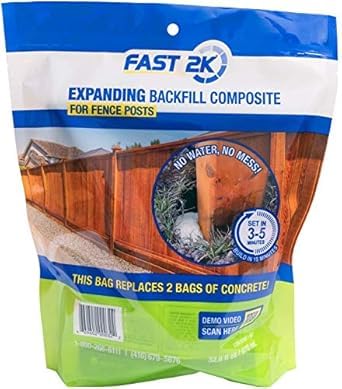
H.B. Fuller Fast 2K Post Anchor Mix | Expanding Composite Footing Compound (Fence, 1)
$27.99
Check price on Amazon
Gtongoko 8LB T Post Driver with Handles, Fence Post Pounder, Black | 2.7" Inner Diameter Fit, Dual Handle Control Grip, Steel Construction with Powder Coating, Fence Installation Support
$30.99
Check price on Amazon
Ready Seal Exterior Wood Stain | Semi-Transparent Oil-Based Formula | Professional Grade Stain and Sealer in One | Ideal for Decks, Fences, Pergolas, Wood Siding & More | Gallon | Dark Walnut
$39.99
Check price on AmazonPrices as of Oct 22, 2026, 4:35 AM UTC. Product prices and availability are accurate as of the date/time indicated and are subject to change. Any price and availability information displayed on Amazon.com at the time of purchase will apply to the purchase of this product.
📱 Free Android Apps by Dixon App Studio
Take every calculator to the job site. Every app is free, works offline and needs no sign-up.
Smart Fencing CalculatorThis site
Fence posts, pickets, rails, concrete, gates and total project cost.
Get it on Google PlaySmart Decking Calculator
Deck boards, joists, footings, railings and material cost estimates.
Get it on Google PlaySmart Drywall Calculator
Drywall sheets, mud, tape, screws and finishing cost estimates.
Get it on Google PlaySod Calculator: Mulch, Topsoil
Sod pallets, mulch, topsoil and seed for the yard around your new fence.
Get it on Google PlayPea Gravel & Stone Calculator
Gravel, crushed stone and base rock in tons and cubic yards.
Get it on Google PlayRoofing Calculator
Roof squares, shingles, underlayment and roof replacement cost.
Get it on Google PlayTile Calculator: Grout, Shower
Tile boxes, grout, thinset and backer board for floors and showers.
Get it on Google PlayInsulation Calculator: R-Value
Blown-in bags, batts, rolls and spray foam to a target R-value.
Get it on Google Play