Fence Property Line Rules
A fence is the most permanent thing most homeowners ever build without a survey, and that is exactly why fences generate more neighbor disputes than any other home improvement. The rules come from three separate places — your city's zoning code, your state's fence and boundary law, and any HOA covenants on your deed — and all three can apply at once.
Below: how close to the line you can build, what changes when a fence sits on the line, who pays, which side faces out, and how to handle easements and encroachments. Once your line is settled, measure the run with the linear footage calculator and confirm permit triggers on the fence permit requirements page.
Three ways to place a fence on a boundary
| Placement | Advantages | Trade-offs |
|---|---|---|
| Fully inside your line (setback fence) | You own it outright, control style and maintenance, no neighbor consent needed | You give up a strip of usable yard, and mowing the outside strip gets awkward |
| Centered on the property line | No wasted land, cost is commonly shared, standard in many neighborhoods | Becomes a shared fence — both owners have rights and, in many states, shared repair duty |
| On the line by written agreement | Same as centered, but the cost split, style and future repairs are documented | Requires a cooperative neighbor and a signed agreement, ideally recorded |
Find the line before you buy a single post
Order of operations that prevents nearly every dispute:
- Pull the plat map. Your county recorder or GIS site usually has it free, with bearings and distances for each lot line.
- Hunt for the corner pins. Iron rods or capped pipes sit at the corners, often 2 to 8 inches below grade. A cheap metal detector and the plat dimensions will find them.
- String the line. Run mason's line pin to pin and walk it. This is where you discover the shed, the hedge or the neighbor's driveway apron in the wrong place.
- Survey if anything is unclear. $400 to $1,200 and a week of waiting beats relocating 150 feet of finished fence.
- Set the fence a few inches inside unless you have a written agreement to share the line. Remember the footing is wider than the post.
Who pays for a boundary fence
Cost sharing is state law, not common sense. Several states have division-fence statutes that can obligate an adjoining owner to contribute to a reasonable boundary fence, and California's Good Neighbor Fence Act presumes an equal split when the builder gives 30 days' written notice with the plan and estimated cost. In many other states there is no obligation at all and a neighbor can simply decline. Before you ask, produce a real number with the cost to install a fence calculator — a specific figure and a written plan gets a far better response than "want to split a fence?"
The good-neighbor side rule
Most codes and HOA covenants that address it require the finished face outward, with posts and rails hidden on your side. If that bothers you, build a shadowbox or board-on-board fence: boards alternate sides so it reads as finished from both yards, at roughly 15 to 25% more material. The privacy fence calculator handles both layouts.
Easements, right-of-way and corner lots
- Utility easement. Fence across it and the utility may remove your panels for access, with no duty to rebuild. Use removable panels or gates at those points.
- Drainage easement. A solid fence can dam runoff and make you liable for a neighbor's flooding. Leave a gap at grade or use open fencing.
- Right-of-way. The city often owns several feet behind the sidewalk. Fencing into it invites a removal order.
- Corner sight triangle. Typically 25 ft back from the intersection each way, capped near 3 ft so drivers can see. This is enforced strictly because it is a safety rule.
When there is already a dispute
Work up the ladder, and document each step: a face-to-face conversation, then a written letter with the survey attached, then mediation (many counties offer it free), and only then a lawyer. Never remove or alter a neighbor's fence yourself, even if a survey shows it is on your land — self-help demolition turns a boundary problem into a property-damage claim against you.
Frequently asked questions
How close to the property line can I build a fence?
Many jurisdictions let you build right up to the line, while others require a setback of 2 to 12 inches or more. The safest common practice is to set the fence a few inches inside your own line so every part of it — posts, footings and the finished face — stays on your land. Check your zoning code for a stated fence setback before you dig.
Can I build a fence on the property line?
Usually yes if your local code allows it, but a fence centered on the line is legally a shared or 'division' fence in many states. That means your neighbor may have rights to it and, under some state fence laws, an obligation to share reasonable repair costs. Get the arrangement in writing before building.
Do I need my neighbor's permission to build a fence?
Not if the fence sits entirely on your property and meets local code — you can build without consent. You do need agreement if the fence straddles the line, if you want to share the cost, or if your HOA or a recorded easement says so.
Which side of the fence faces the neighbor?
The common rule, and an explicit requirement in many city codes and HOA covenants, is that the finished side faces outward — toward the neighbor and the street — with rails and posts on your side. Panel-style vinyl and shadowbox fences avoid the question by looking the same from both sides.
How do I find my property line before building a fence?
Start with your plat map or deed, then look for existing survey pins at the corners (a metal detector often finds them a few inches down). If the corners are missing or disputed, order a boundary survey for roughly $400 to $1,200. That is far cheaper than moving a finished fence.
What if my neighbor's fence is on my property?
Talk first, and get a survey to establish the facts. If it is a genuine encroachment, options range from a written license allowing it to stay, to a boundary line agreement, to demanding removal. Long-standing encroachments can raise adverse possession or acquiescence claims in some states, so do not let years pass without addressing it.
Who owns a fence on the property line?
A fence centered on the line is generally owned jointly by both landowners, regardless of who paid for it. A fence built entirely inside one owner's line belongs to that owner alone, who is also solely responsible for repairs.
Does my neighbor have to pay half for a fence?
It depends on your state. Several states have division-fence statutes that can require adjoining owners to share the cost of a reasonable boundary fence, and some — California's Good Neighbor Fence Act is the best known — presume an equal split with advance written notice. Elsewhere, cost sharing is purely voluntary.
Can I paint or attach things to my side of a shared fence?
For a shared fence, generally no material alteration without the co-owner's agreement, and that includes painting, staining, attaching trellises or mounting heavy items. For a fence entirely on your own land, only you decide.
How far from the sidewalk or street can a fence go?
Most cities require a fence to stay behind the right-of-way line, which often sits several feet inside the sidewalk, and to drop to about 3 feet inside the corner sight triangle. The strip you assume is your front yard may legally belong to the city.
What about easements running along my property line?
Utility, drainage and access easements often follow lot lines. You can usually fence across one, but the utility can remove the fence to reach its equipment and is generally not required to rebuild it. Install removable panels where an easement crosses your run.
What is a spite fence?
A fence built primarily to annoy a neighbor — typically unusually tall, ugly or blocking light and views with no legitimate purpose. Many states and cities have spite-fence laws that allow a neighbor to force its removal or reduction, so keep your motives, and your height, defensible.
Should I tell my neighbor before building?
Yes, always, even when it is not required. A short conversation with your plan and timeline defuses almost every fence dispute before it starts, and it is the moment to raise cost sharing if the fence benefits both of you.
Can a survey stake be trusted as the property line?
Only if it was placed by a licensed surveyor and has not been disturbed. Stakes get moved by landscaping, plowing and previous owners. Iron pins set in the ground are far more reliable than wooden stakes, and a current survey beats both.
General information for U.S. homeowners, not legal advice. Boundary and fence law varies by state and municipality; consult a licensed surveyor or a real estate attorney for your situation.
📝 Related Articles
🔧 Recommended Fencing Tools & Supplies
Disclosure: As an Amazon Associate I earn from qualifying purchases.

VEVOR Post Hole Digger,52cc 1450W Auger Digger,Gas Powered Earth Digger with Two Drill Bit 6''& 10''and 3 Extension Rods,for Farmland,Garden and Plant,EPA Certification,Black+Orange+White
$159.90
Check price on Amazon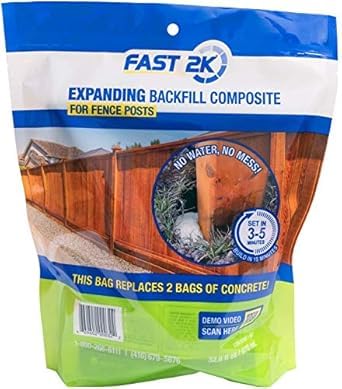
H.B. Fuller Fast 2K Post Anchor Mix | Expanding Composite Footing Compound (Fence, 1)
$27.99
Check price on Amazon
Gtongoko 8LB T Post Driver with Handles, Fence Post Pounder, Black | 2.7" Inner Diameter Fit, Dual Handle Control Grip, Steel Construction with Powder Coating, Fence Installation Support
$30.99
Check price on Amazon
Ready Seal Exterior Wood Stain | Semi-Transparent Oil-Based Formula | Professional Grade Stain and Sealer in One | Ideal for Decks, Fences, Pergolas, Wood Siding & More | Gallon | Dark Walnut
$39.99
Check price on AmazonPrices as of Oct 22, 2026, 4:35 AM UTC. Product prices and availability are accurate as of the date/time indicated and are subject to change. Any price and availability information displayed on Amazon.com at the time of purchase will apply to the purchase of this product.
📱 Free Android Apps by Dixon App Studio
Take every calculator to the job site. Every app is free, works offline and needs no sign-up.
Smart Fencing CalculatorThis site
Fence posts, pickets, rails, concrete, gates and total project cost.
Get it on Google PlaySmart Decking Calculator
Deck boards, joists, footings, railings and material cost estimates.
Get it on Google PlaySmart Drywall Calculator
Drywall sheets, mud, tape, screws and finishing cost estimates.
Get it on Google PlaySod Calculator: Mulch, Topsoil
Sod pallets, mulch, topsoil and seed for the yard around your new fence.
Get it on Google PlayPea Gravel & Stone Calculator
Gravel, crushed stone and base rock in tons and cubic yards.
Get it on Google PlayRoofing Calculator
Roof squares, shingles, underlayment and roof replacement cost.
Get it on Google PlayTile Calculator: Grout, Shower
Tile boxes, grout, thinset and backer board for floors and showers.
Get it on Google PlayInsulation Calculator: R-Value
Blown-in bags, batts, rolls and spray foam to a target R-value.
Get it on Google Play