Fence Height Extension Calculator
Raise an existing fence: extenders, topper panels and the permit-height check.
Adding a lattice topper, slats or mesh to the top of a fence? Enter the length of the run, the post spacing, the height it is now and the height you want. The calculator counts post extenders and extension panels, gives each extender's length including the overlap onto the old post, shows how much more wind the fence will catch, and checks the new height against the 7 ft permit exemption in the International Residential Code.
Your choice — how far it fastens to the old post
Calculation Results
IRC R105.2 exempts fences not over 7 ft from a building permit, but cities and HOAs often set lower limits — especially in front yards and on corners.
📱 More free Android calculators
Fencing, decking and drywall estimators from Dixon App Studio — all free on Google Play.
Smart Fencing CalculatorThis site
Fence posts, pickets, rails, concrete, gates and total project cost.
Get it on Google PlaySmart Decking Calculator
Deck boards, joists, footings, railings and material cost estimates.
Get it on Google PlaySmart Drywall Calculator
Drywall sheets, mud, tape, screws and finishing cost estimates.
Get it on Google PlaySod Calculator: Mulch, Topsoil
Sod pallets, mulch, topsoil and seed for the yard around your new fence.
Get it on Google PlayGravel & Stone Calculator
Gravel, crushed stone and base rock in tons and cubic yards.
Get it on Google Play🔧 Recommended Fencing Tools & Supplies
Disclosure: As an Amazon Associate I earn from qualifying purchases.

VEVOR Post Hole Digger,52cc 1450W Auger Digger,Gas Powered Earth Digger with Two Drill Bit 6''& 10''and 3 Extension Rods,for Farmland,Garden and Plant,EPA Certification,Black+Orange+White
$159.90
Check price on Amazon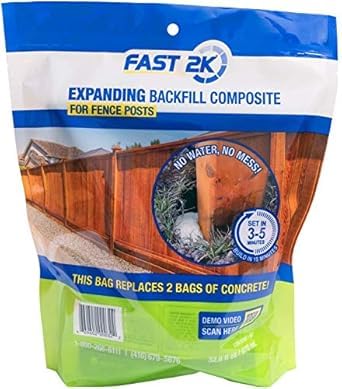
H.B. Fuller Fast 2K Post Anchor Mix | Expanding Composite Footing Compound (Fence, 1)
$27.99
Check price on Amazon

Ready Seal Exterior Wood Stain | Semi-Transparent Oil-Based Formula | Professional Grade Stain and Sealer in One | Ideal for Decks, Fences, Pergolas, Wood Siding & More | Gallon | Dark Walnut
$39.99
Check price on AmazonPrices as of Oct 1, 2026, 4:36 AM UTC. Product prices and availability are accurate as of the date/time indicated and are subject to change. Any price and availability information displayed on Amazon.com at the time of purchase will apply to the purchase of this product.
🛠️ How This Calculator Works
Every existing post gets one extender: the run divided by the post spacing gives the sections, and an open run has one more post than sections. Extension panels are the run divided by the panel length, rounded up. Each extender is the added height plus the length you overlap and fasten to the old post. A solid fence catches wind in proportion to its height, so the extra wind area is the added height divided by the old height.
📐 Formula
Added = target − current · Sections = ceil(run ÷ spacing) · Posts = sections + 1 (open run) · Panels = ceil(run ÷ panel length) · Extender = added + overlap · Wind area = added ÷ current📝 Example Calculation
100 ft of 6 ft privacy fence, posts every 8 ft, raised to 7 ft with 8 ft lattice panels and 18 in overlap on each post: Added = 12 in Posts = ceil(100 ÷ 8) + 1 = 14 extenders, each 12 + 18 = 30 in Panels = ceil(100 ÷ 8) = 13 Wind area +17% · 7 ft is not over 7 ft (IRC R105.2)
💡 Pro Tips from Fence Builders
- Check your city's fence height rule and any HOA covenant before buying — many limit backyard fences to 6 ft and front yards lower.
- A taller solid fence catches more wind; open lattice or spaced slats add height with much less load on old posts.
- Probe the old posts at the ground first. If they are soft or loose, an extension will push them over — replace them instead.
- Fasten extenders with structural screws or through-bolts, not nails, and keep the tops level with a string line.
- Use the same lumber species and finish as the fence so the topper weathers to match.
❓ Frequently Asked Questions
How tall can a fence be without a permit?
The 2021 International Residential Code (R105.2) exempts fences not over 7 ft high from a building permit. Many cities amend that and set their own limits — often lower in front yards — and HOAs can be stricter still, so check your local zoning code.
What is the regular height of a fence?
Backyard privacy fences are most often 6 ft tall, and front-yard or decorative fences 3 to 4 ft, largely because that is what local zoning allows and what panels are sold in. Your city's rule is the one that counts.
How do I extend the height of a fence?
Fasten an extender to the side of each post (a short post sistered on, or a metal post extender bracket), run a top rail between them, then attach lattice, slats or mesh panels. This calculator counts the extenders and panels for your run.
How much overlap should a post extender have?
Enough to fasten it solidly to sound wood with several screws or bolts. It is a judgement call that depends on the added height and wind — the calculator uses the overlap you enter to give the extender length.
Can I add height to a chain link fence?
Yes. Chain link extension kits use taller line posts or post sleeves and a strip of fabric along the top; privacy slats or screening can be added too. Count the posts and the run here, then follow the kit maker's instructions.
Will a taller fence blow over?
A solid fence takes wind load roughly in proportion to its height, so raising 6 ft to 7 ft adds about 17% more area for the same posts. Open lattice adds height with less wind load; old or shallow posts may need replacing.
📬 Free Fencing Cost Guide
Get weekly fencing tips, material cost updates, and exclusive calculator guides — straight to your inbox.
No spam, ever. Unsubscribe anytime.
📝 Related Articles
🧮 You May Also Need
Related calculators for your fencing project






Extenders and panels per 100 ft
Open run, 8 ft panels, 18 in overlap.
| Post spacing | Extenders | Panels | 6 → 7 ft extender | 6 → 8 ft extender |
|---|---|---|---|---|
| 6 ft | 18 | 13 | 30 in | 42 in |
| 8 ft | 14 | 13 | 30 in | 42 in |
Height, permits and neighbours
The model code most US towns adopt, the International Residential Code, exempts fences not over 7 ft from a building permit (R105.2). Zoning is separate: it sets the maximum height, usually lower in front yards and at corners where drivers need to see past the fence. Read your city's fence rule and any HOA covenant, and check where the property line is before you build — see our fence permit guide and property line rules.
Related calculators
Building a new, taller fence instead? Use the privacy fence calculator, the fence board calculator and the post depth calculator — taller fences need deeper posts.