Cinder Block Wall Fence Calculator
Blocks, caps, mortar, rebar, grout and footing for a CMU fence wall.
A block wall is a small masonry job, not a fence kit. This counts standard 8x8x16 blocks course by course, the caps, mortar bags, vertical rebar and grout, and the concrete footing, then prices the materials.
Calculation Results
240 sq ft of wall at 1.125 blocks per sq ft. Walls over 4 ft usually need an engineered design and a permit — check before you dig.
📱 More free Android calculators
Fencing, decking and drywall estimators from Dixon App Studio — all free on Google Play.
Smart Fencing CalculatorThis site
Fence posts, pickets, rails, concrete, gates and total project cost.
Get it on Google PlaySmart Decking Calculator
Deck boards, joists, footings, railings and material cost estimates.
Get it on Google PlaySmart Drywall Calculator
Drywall sheets, mud, tape, screws and finishing cost estimates.
Get it on Google PlaySod Calculator: Mulch, Topsoil
Sod pallets, mulch, topsoil and seed for the yard around your new fence.
Get it on Google PlayGravel & Stone Calculator
Gravel, crushed stone and base rock in tons and cubic yards.
Get it on Google Play🔧 Recommended Fencing Tools & Supplies
Disclosure: As an Amazon Associate I earn from qualifying purchases.

VEVOR Post Hole Digger,52cc 1450W Auger Digger,Gas Powered Earth Digger with Two Drill Bit 6''& 10''and 3 Extension Rods,for Farmland,Garden and Plant,EPA Certification,Black+Orange+White
$159.90
Check price on Amazon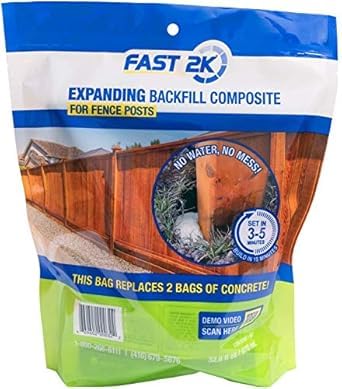
H.B. Fuller Fast 2K Post Anchor Mix | Expanding Composite Footing Compound (Fence, 1)
$27.99
Check price on Amazon

Ready Seal Exterior Wood Stain | Semi-Transparent Oil-Based Formula | Professional Grade Stain and Sealer in One | Ideal for Decks, Fences, Pergolas, Wood Siding & More | Gallon | Dark Walnut
$39.99
Check price on AmazonPrices as of Sep 29, 2026, 4:37 AM UTC. Product prices and availability are accurate as of the date/time indicated and are subject to change. Any price and availability information displayed on Amazon.com at the time of purchase will apply to the purchase of this product.
🛠️ How This Calculator Works
A standard concrete masonry unit is 16 inches long and 8 inches high including the 3/8 inch mortar joint, so every course is the length divided by 16 inches and the number of courses is the height divided by 8 inches. That works out at 1.125 blocks per square foot. One 80 lb bag of Type S mortar lays up to about 13 blocks (QUIKRETE Mason Mix data sheet). Vertical #4 bars go in a grouted cell at your spacing plus one at the end, and the top course is a bond beam with two continuous bars filled solid. The footing is twice the wall width (16 inches) by your depth.
📐 Formula
Blocks = ⌈length × 12 ÷ 16⌉ × ⌈height × 12 ÷ 8⌉ × (1 + waste) · Mortar bags = (blocks + caps) ÷ 13 · Vertical bars = ⌊length × 12 ÷ spacing⌋ + 1 · Grout = bars × courses × 0.115 cu ft + bond beam × 0.3 cu ft · Footing = length × 16/12 × depth ÷ 27📝 Example Calculation
40 ft wall, 6 ft high, rebar every 48", 12" deep footing: Blocks = 30 per course × 9 courses = 270 (+5% = 284) Caps = 30, mortar = (270 + 30) ÷ 13 = 23.1 → 24 bags Vertical bars = ⌊480 ÷ 48⌋ + 1 = 11 Grout = 11 × 9 × 0.115 + 30 × 0.3 = 20.4 cu ft → 34 bags Footing = 40 × 1.33 × 1 ÷ 27 = 1.98 cu yd
💡 Pro Tips from Fence Builders
- Order ready-mix for the footing once it passes about a yard; mixing 60+ bags by hand for one pour is a long, uneven day.
- Set the vertical bars in the footing while it is wet, at the cell spacing, so the block cores drop over them. Mark cell centres on the forms first.
- Lay the corner and end blocks first, pull a mason's line between them, and fill in to the line. Check level every course and plumb every third.
- Grout the rebar cells in lifts no higher than 5 ft, and rod each lift to remove voids. Fill the bond beam course solid.
- Tool the joints when the mortar is thumbprint-hard; concave joints shed water best.
- Stucco, paint or a split-face block finishes a CMU wall. Budget it separately — it is often as much again as the block.
❓ Frequently Asked Questions
How many cinder blocks do I need for a wall?
Multiply the wall length by its height in square feet and multiply by 1.125, because a standard 8x8x16 block covers 0.889 sq ft including the mortar joint. A 40 ft by 6 ft wall is 240 sq ft, so 270 blocks, plus about 5% for cuts and breakage.
How much mortar do I need per block?
One 80 lb bag of Type S mortar lays up to about 13 standard 8x8x16 blocks (QUIKRETE's data sheet figure), so a 270-block wall with 30 caps needs about 24 bags. Premixed bags are easiest for small walls; for bigger ones, masonry cement and sand mixed on site is cheaper.
How much does a cinder block fence cost?
Materials for a plain 6 ft CMU wall typically run $25 to $45 per linear foot with footing, rebar and grout; installed by a mason, $60 to $140 per foot depending on region, height and finish. Use your local block and concrete prices in the calculator for your own figure.
Does a block wall fence need rebar?
Almost always for a freestanding wall over about 3 ft. Vertical #4 bars in grouted cells every 32 to 48 inches, plus a bond beam at the top, are typical; many jurisdictions publish a standard design for garden walls. Walls over 6 ft or in seismic areas need an engineered design.
How deep should the footing be for a block wall?
At least 12 inches deep and 16 inches wide for a typical 8 inch wall up to 6 ft, and below the frost line in cold climates. Local code governs — the permit office will state the minimum.
What is the difference between cinder block and concrete block?
Most blocks sold today are concrete masonry units made with sand and gravel; true cinder blocks used coal ash and are rarely made now. People use both names for the same 8x8x16 hollow block.
Do I need a permit for a block wall?
Many towns require one for any masonry wall over 3 or 4 ft, and for any wall retaining soil. Check the fence height limits on your boundary as well.
How much grout does a block wall take?
Only the cells with rebar and the top bond beam are usually filled. One filled cell in an 8 inch block takes about 0.115 cu ft per course, and a solid bond-beam block about 0.3 cu ft. An 80 lb bag yields about 0.6 cu ft.
📬 Free Fencing Cost Guide
Get weekly fencing tips, material cost updates, and exclusive calculator guides — straight to your inbox.
No spam, ever. Unsubscribe anytime.
📝 Related Articles
🧮 You May Also Need
Related calculators for your fencing project


A block wall is masonry, so count it like masonry
A wood or vinyl fence is counted in posts and panels. A concrete block wall is counted in courses: how many blocks fit along the run, and how many rows fit up the height. Standard blocks are 15⅝ by 7⅝ inches, which becomes 16 by 8 once you add a 3/8 inch mortar joint, so one block covers 0.889 sq ft and a square foot of wall takes 1.125 blocks. That constant, the 13-blocks-per-bag mortar rule and the grout per cell are what this calculator is built on.
Footing first
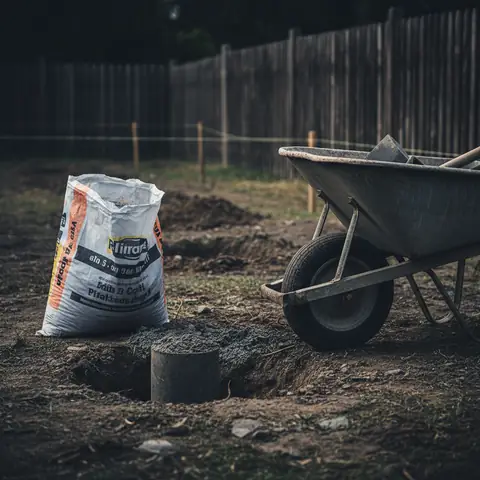
The footing carries the wall. For an 8 inch wall up to about 6 ft, 16 inches wide and 12 inches deep is typical, deeper in frost country. Put a compacted gravel base in the trench — the Smart Gravel Calculator sizes it — then pour and set the vertical bars into the wet concrete at your cell spacing. For smaller pours, the concrete calculator converts yards to bags.
Rebar and grout
Freestanding walls resist wind with steel. Vertical #4 bars run from the footing into grouted cells every 32 to 48 inches and at each end; the top course is a bond-beam block with two continuous bars, filled solid. Only those cells take grout, so a partially grouted wall uses far less than a solid one. If your permit office issues a standard garden-wall detail, set the spacing above to match it.
Block wall vs other fences
A block wall costs more than a wood privacy fence up front but lasts for decades, blocks noise better and does not need re-staining. Compare the total with the privacy fence calculator, vinyl fence calculator and wrought iron cost calculator. A popular middle ground is block pillars with wood or metal panels between them; count the panels with the fence panel calculator.
On a slope
Block walls step: the footing steps down in 8 inch increments (one course) and the wall follows. Work out the number of steps with the fence on a slope calculator using 8 inch steps, and add the extra courses on the low side to the count here.
Permits and height
Masonry walls over 3 to 4 ft commonly need a permit, and any wall holding back soil is a retaining wall with its own rules. Read the fence permit guide before you order. Remodelling more of the yard? The sister roofing, decking and tile calculators use the same approach for their trades.