Fence Gate Hardware Guide — Hinges, Latches & Wheels
The right heavy-duty hinges, latches, and anti-sag kits for gates that last.
Gates fail long before fences do. The fence has hundreds of posts sharing the load; the gate has two hinges and one latch carrying every open-and-close cycle for the next decade. Most sagging gates I've replaced were killed by cheap $12 hinge kits from big-box hardware aisles. Here's how to spec gate hardware that actually holds up, with detailed picks for every gate style.
Gate Hardware Reference Table
| Gate Width | Hinge Type | Latch Type | Anti-Sag Kit? |
|---|---|---|---|
| Under 3 ft (walk-thru) | Two 6–8" strap hinges | Gravity or thumb latch | Optional |
| 3–4 ft (yard gate) | Two 12" strap hinges | Thumb latch or lockable | Recommended |
| 4–5 ft (extra wide walk) | Three 12" strap or 2 gudgeon | Lockable / dead bolt | Required |
| Pool gate (4 ft, code) | Self-closing spring hinges | 54"+ lockable, self-latching | Recommended |
| Drive gate (10–12 ft single) | Bolt-through gudgeon hinges | Drop rod + cane bolt | Required |
| Double drive gate (14+ ft) | Heavy-duty gudgeons both sides | Center drop rods + latch | Required both sides |
1. Hinges — The Load Bearer
Every gate rides on its hinges. Skimp here and nothing else matters.
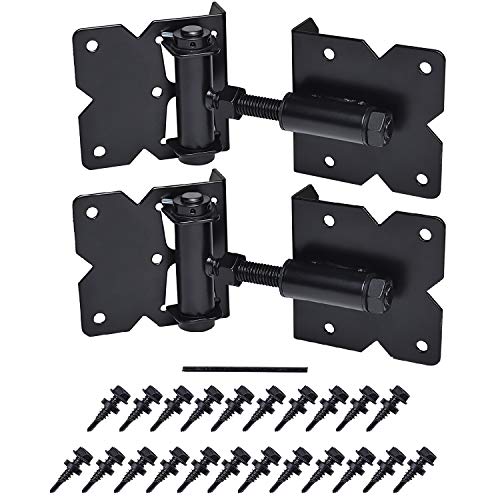
Strap hinges — Long, flat hinges (8", 12", 18") that spread the load across the gate rail. The 12-inch heavy-duty version with a 5/16" pin handles a 4-ft wood yard gate for 15+ years. Buy powder-coated or galvanized; painted mild-steel hinges rust at the pin within two winters.
Gudgeon (pintle & eye) hinges — A pin sticking out of the post that a gate-side eye drops onto. Used on heavy drive gates because you can lift the gate off for maintenance or seasonal storage. Weight rating on the pintle is the number that matters — spec for at least 2× your gate weight.
Self-closing spring hinges — Required by pool code in every US state. The spring pulls the gate closed after every entry. Bad ones squeak within a month; buy solid brass or stainless.
2. Latches — The Everyday Failure Point
Latches get used more than hinges — every dog walk, every trash-day trip, every kid coming home. Cheap latches wear out inside a season.
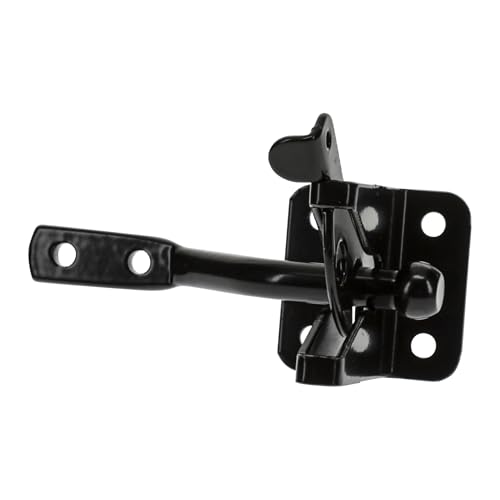
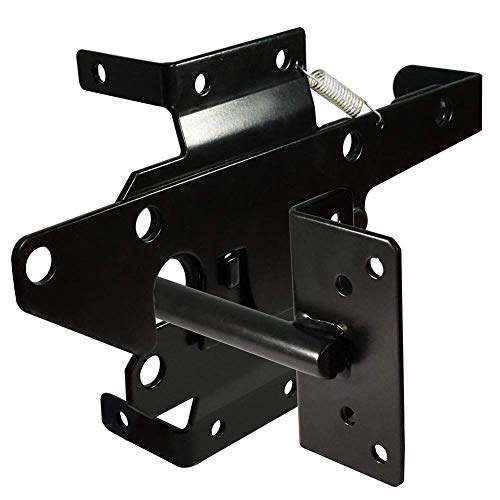
- Gravity latch — A pivoting arm that drops into a slot when the gate closes. Simplest, cheapest, most reliable for basic yard gates.
- Thumb latch — The lever-style handle mounted through the gate. Nicer look, works from both sides, more parts to break. Buy stainless or brass.
- Lockable pool-code latch — Self-latching mechanism 54"+ off the ground (out of a child's reach). Every state has this rule now — non-compliant latches are one of the top pool-related lawsuits.
- Drop rod / cane bolt — Long rod that drops into a socket in the ground. Used on the fixed side of a double drive gate.
3. Anti-Sag Kits — The Preventive Fix
Every gate over 4 ft wide will sag without a diagonal brace. Anti-sag kits are a turnbuckle-and-cable diagonal that pulls the leading (latch-side) corner back up toward the hinge-side top corner.
Install rule: the cable must run from the top corner on the hinge side down to the bottom corner on the latch side. Reverse it and you'll actually make the sag worse. Tighten the turnbuckle just enough to lift the latch corner ⅛" — over-tension warps the frame.
4. Gate Wheels — For Wide or Uneven Ground
A single wheel under the latch corner of a wide gate carries the weight the hinges can't. Look for a swivel wheel with a spring-loaded caster; it drops when the gate closes and rides up over uneven ground when opening. Especially useful on gravel drives.
5. Fasteners & Small Parts
- Lag bolts, not wood screws. Hinges see leverage loads no wood screw handles. 5/16" × 3" hex-head lag bolts through hinge straps into 4×4 posts.
- Carriage bolts through the gate frame. Prevents the hinge screw from tearing out of end-grain over time.
- Galvanized washers — under every lag bolt head, so the bolt doesn't dig into the metal hinge strap and loosen.
6. Hinge Placement Rules
- Top hinge: 8–10" from the top of the gate.
- Bottom hinge: 8–10" from the bottom.
- Third hinge (5+ ft gates): dead center between the other two.
- Both hinges on the same side of the post — obvious in hindsight, but easy to mount one on the front face and one on the side.
7. Common Mistakes to Avoid
- Buying a $15 hinge kit for a $300 wood gate. False economy.
- Setting the gate post in less concrete than the line posts. Gate posts carry more load than any other post on the fence.
- Skipping anti-sag on a "temporary" gate. Every temporary gate becomes permanent.
- Wrong hand — buying a right-hand-swing latch for a left-hand-swing gate. Check before you leave the store.
Building the gate itself from boards? The fence board calculator counts boards for the gate leaf and the run on either side, using real dressed widths. On a picket gate beside a pool, the picket spacing calculator gives equal gaps that stay under the 4 in pool-code limit.
Full Rollup
Size your gate opening, framing, and hardware needs with the Gate Calculator. Repair a sagging gate: Fence Repair Calculator. Related: Fence Repair Guide.