Best Fence Stain: Which Type for Your Wood?
Oil or water-based, semi-transparent or solid: which suits your wood and climate, and how many gallons your fence takes.
As an Amazon Associate I earn from qualifying purchases. This guide is written from product specifications, building practice and our calculators — it is not a hands-on product test. Affiliate disclosure
The best fence stain is the one that matches your wood and how often you want to recoat. Semi-transparent oil stains soak in and fade gracefully; solid stains hide weathered or mismatched boards and last longer between coats; clear sealers keep the natural colour but need doing almost every year.
This guide compares the stain types, lists what to read on the can, and works out gallons with the same function as our fence stain calculator. For prep and application, see the complete fence staining guide.
Compared by type
Pros and cons describe each type from its specifications. The product in each row is a current, well-rated option of that type on Amazon, refreshed twice a day — check the listing's specifications against the “check” line before you buy.
Semi-transparent oil stain
Best for: Cedar and pressure-treated pine where you want the grain to show
 Ready Seal Exterior Wood Stain | Semi-Transparent Oil-Based Formula | Professional Grade Stain and Sealer in One | Ideal for Decks, Fences, Pergolas, Wood Siding & More | Gallon | Dark Walnut$39.99View on Amazon →
Check: Oil or oil-modified base, and the recoat interval on the label
- Soaks into the wood, so it fades rather than peeling
- Shows the grain while adding UV protection
- Easy to recoat without stripping
- Needs recoating every 2–4 years
- Longer dry time than water-based
- Oily rags are a fire risk if balled up
Solid-colour stain
Best for: Older, weathered or mismatched boards
 DEFY Solid Color Wood Stain DW-Solid - UV Resistant, Opaque, Exterior Deck & Fence Paint - 1 Gallon$66.96View on Amazon →
Check: Rated for vertical exterior wood, and the colour range
- Hides grey, patched and mismatched boards
- Longest time between coats of any stain
- Blocks UV almost completely
- Hides the grain
- Forms a thin film that can eventually peel
- Changing colour later means more coats
Water-based stain and sealer
Best for: Quick jobs, new wood and low-odour work near the house
 SaverSystems #1 Deck Premium Semi-Transparent Outdoor Wood Stain and Sealer in One - Water Based Wood Stain for Decks, Fences, & Siding - 1 Gallon (Natural)$35.99View on Amazon →
Check: Whether it can go on damp or new wood, and the minimum temperature
- Low odour and soap-and-water clean-up
- Dries fast — often a second coat the same day
- Resists mildew well
- Penetrates less than oil on dense or old wood
- Can show lap marks in hot sun
- Needs dry weather for the cure
Clear water sealer
Best for: Keeping new cedar's natural colour for a season
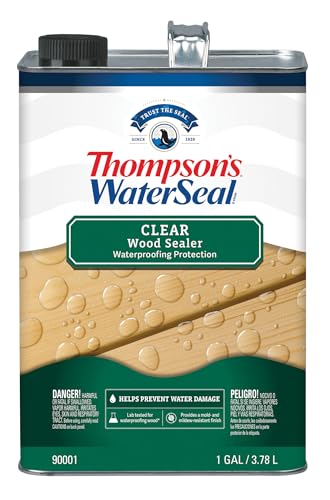 Thompson's WaterSeal Clear Wood Sealer, Clear, 1 Gallon$19.94View on Amazon →
Check: Whether it has UV inhibitors (most clear sealers have little)
- Keeps the natural wood colour
- Cheapest per square foot
- Quick to apply
- Little UV protection — wood still greys
- Needs reapplying about every year
- Mostly a water repellent, not a stain
Pump sprayer for stain
Best for: Applying thin stains fast on pickets
 PetraTools HD101 Garden Pump Sprayer, 52-in Long Hose & 2 Nozzles, 1 Gallon$24.99View on Amazon →
Check: Viton or oil-resistant seals if you spray oil stain
- Much faster than brushing pickets
- No power or hoses
- Cheap and easy to clean
- Only suits thin, penetrating stains
- Overspray drifts in wind
- Still needs back-brushing for an even coat
| Type | Current option | Pros | Cons |
|---|---|---|---|
| Semi-transparent oil stainBest for: Cedar and pressure-treated pine where you want the grain to showCheck: Oil or oil-modified base, and the recoat interval on the label | Ready Seal Exterior Wood Stain | Semi-Transparent Oil-Based Formula | Professional Grade Stain and Sealer in One | Ideal for Decks, Fences, Pergolas, Wood Siding & More | Gallon | Dark Walnut$39.99View on Amazon → |
|
|
| Solid-colour stainBest for: Older, weathered or mismatched boardsCheck: Rated for vertical exterior wood, and the colour range | DEFY Solid Color Wood Stain DW-Solid - UV Resistant, Opaque, Exterior Deck & Fence Paint - 1 Gallon$66.96View on Amazon → |
|
|
| Water-based stain and sealerBest for: Quick jobs, new wood and low-odour work near the houseCheck: Whether it can go on damp or new wood, and the minimum temperature | SaverSystems #1 Deck Premium Semi-Transparent Outdoor Wood Stain and Sealer in One - Water Based Wood Stain for Decks, Fences, & Siding - 1 Gallon (Natural)$35.99View on Amazon → |
|
|
| Clear water sealerBest for: Keeping new cedar's natural colour for a seasonCheck: Whether it has UV inhibitors (most clear sealers have little) | Thompson's WaterSeal Clear Wood Sealer, Clear, 1 Gallon$19.94View on Amazon → |
|
|
| Pump sprayer for stainBest for: Applying thin stains fast on picketsCheck: Viton or oil-resistant seals if you spray oil stain | PetraTools HD101 Garden Pump Sprayer, 52-in Long Hose & 2 Nozzles, 1 Gallon$24.99View on Amazon → |
|
|
Prices as of Sep 27, 2026, 8:10 PM UTC. Product prices and availability are accurate as of the date/time indicated and are subject to change. Any price and availability information displayed on Amazon.com at the time of purchase will apply to the purchase of this product.
How much stain you need
Stain is bought by area: length × height × sides × coats, divided by the coverage on the can. Rough-sawn boards drink far more than smooth ones. The fence stain calculator runs this formula; the numbers below come from the same function.
Worked example: 150 ft of 6 ft fence, two coats
- Area, both sides: 150 × 6 × 2 = 1,800 sq ft
- Smooth boards at about 200 sq ft per gallon → 18 gallons
- Rough-sawn boards at about 150 sq ft per gallon → 24 gallons
- Your side only, smooth boards → 9 gallons
18 gallons for both sides of smooth boards, or 24 for rough-sawn — buy 5-gallon pails where you can so the colour matches.
What to look for on the can
- Opacity: clear, semi-transparent, semi-solid or solid. More pigment means more UV protection and a longer interval between coats.
- Base: oil penetrates old, dry wood best; water-based dries fast and cleans up easily. Do not put water-based over a fresh oil coat (or the reverse) without checking the label.
- New pressure-treated wood: many stains need the boards to dry for weeks first. Look for the wait time on the label.
- Coverage per gallon and whether it assumes smooth or rough wood.
- Temperature and rain window: most stains need several dry hours above about 50 °F.
Which stain suits your fence
| Wood | Usual choice | Why |
|---|---|---|
| New cedar | Semi-transparent oil, or a clear sealer with UV blockers | Keeps the colour and grain |
| New pressure-treated pine | Wait until dry, then semi-transparent or solid | Wet treated wood repels stain |
| Grey, weathered boards | Clean and brighten, then semi-solid or solid | Pigment evens out the colour |
| Mixed old and new boards | Solid stain | Hides the mismatch |
| Previously solid-stained | Solid stain again | Semi-transparent cannot go over a film |
Comparing lumber first? See cedar vs pressure-treated. Spraying a long fence? The paint sprayer for fences guide covers which sprayer handles which stain.
Shop the types above
As an Amazon Associate I earn from qualifying purchases.
Ready Seal Exterior Wood Stain | Semi-Transparent Oil-Based Formula | Professional Grade Stain and Sealer in One | Ideal for Decks, Fences, Pergolas, Wood Siding & More | Gallon | Dark Walnut
$39.99
View on Amazon →DEFY Solid Color Wood Stain DW-Solid - UV Resistant, Opaque, Exterior Deck & Fence Paint - 1 Gallon
$66.96
View on Amazon →SaverSystems #1 Deck Premium Semi-Transparent Outdoor Wood Stain and Sealer in One - Water Based Wood Stain for Decks, Fences, & Siding - 1 Gallon (Natural)
$35.99
View on Amazon →Thompson's WaterSeal Clear Wood Sealer, Clear, 1 Gallon
$19.94
View on Amazon →PetraTools HD101 Garden Pump Sprayer, 52-in Long Hose & 2 Nozzles, 1 Gallon
$24.99
View on Amazon →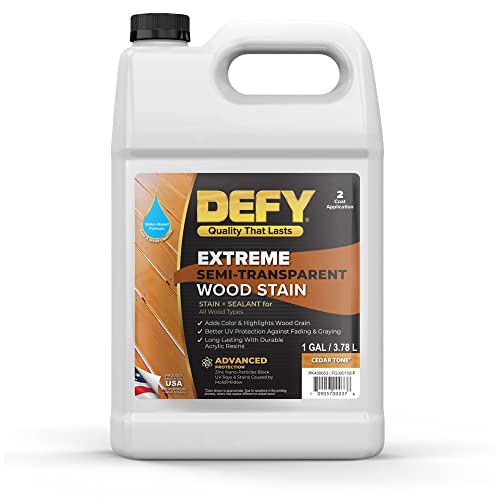
DEFY Extreme Wood Stain and Sealer in One - 1 Gallon Semi-Transparent Waterproof Coating for All Wood Types - Cedar Tone
$54.54
View on Amazon →Prices as of Sep 27, 2026, 8:10 PM UTC. Product prices and availability are accurate as of the date/time indicated and are subject to change. Any price and availability information displayed on Amazon.com at the time of purchase will apply to the purchase of this product.
Safety notes
- Rags soaked in oil stain can self-ignite. Lay them flat outdoors to dry or keep them in a sealed metal can of water.
- Wear eye protection and gloves; when spraying, add a respirator rated for the product and cover plants, cars and the neighbour's side.
- Wood brighteners and strippers are caustic — rinse plants before and after.